Ansible Alternative for Small Teams
A Lightweight Ansible Alternative for Small Teams
Use CloudRay to run, schedule, and observe remote scripts across cloud and on‑prem servers — without the complexity of Ansible, YAML roles, or configuration management tooling.
Why Small Teams Look for an Ansible Alternative
Ansible is powerful — but for many teams, it becomes heavy long before it becomes helpful.
Complexity
Requires a full configuration management mindset and complex YAML roles.
YAML Fatigue
Playbooks and inventory files become complex quickly, making them hard to maintain.
Overkill
Often overkill when the goal is simply to run scripts on servers.
No Real-time Logs
Debugging playbooks can be slow, with no real-time logs during execution.
The Reality
Most infrastructure teams start with Bash scripts and only need a reliable way to orchestrate, schedule, and monitor them. This is where CloudRay fits naturally.
What CloudRay Does Instead
CloudRay provides a lightweight automation layer for the 70% of tasks that Ansible is often overkill for.
Run Bash Scripts — No SSH Required
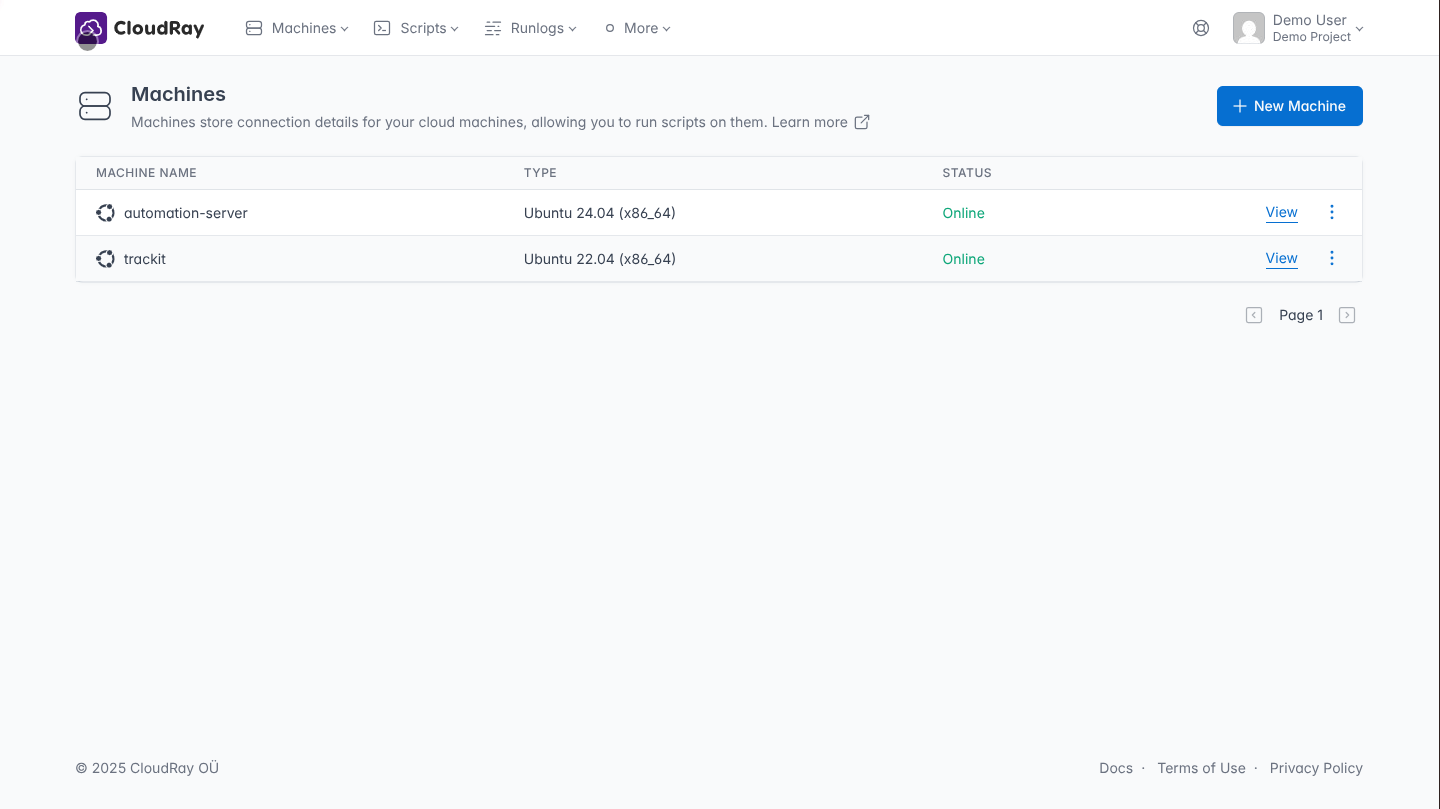
Execute your existing Bash scripts across 1 or 100 servers instantly. CloudRay handles the connection and execution, giving you clear exit codes and runtime data without manual SSH.
- Execute scripts on 1 or 100 servers
- Real-time output per server
- Clear exit codes and runtime data
- No manual SSH required
Observe and Audit Everything
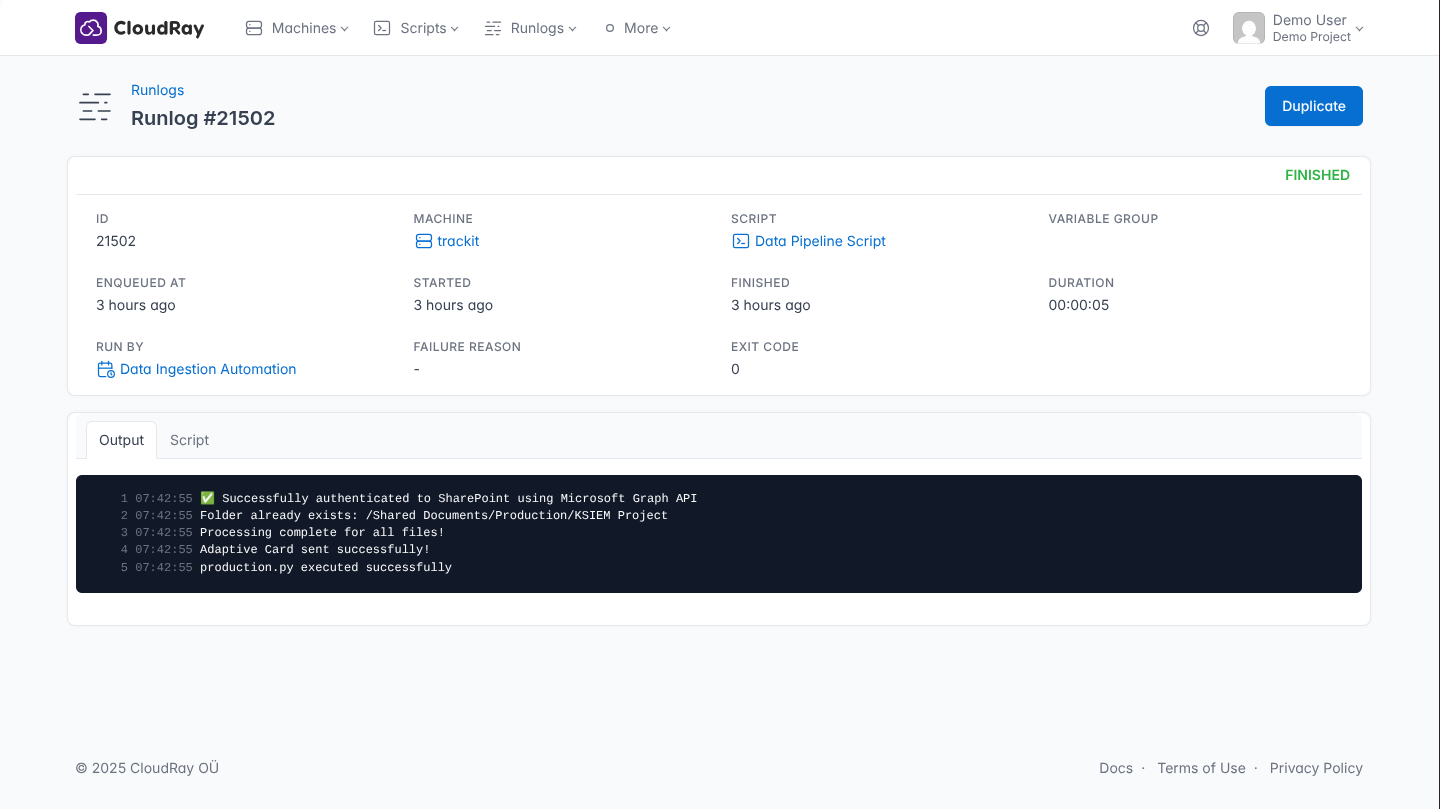
Get predictable behavior with full visibility. See live logs, resource usage, and keep a permanent audit trail of who ran what and when.
- Live stdout/stderr streaming
- CPU & memory usage tracking
- Per-server execution logs
- Full audit history
Schedule Reliably
Cron-like scheduling with presets. Time-zone aware and drift-free execution.
Event Triggers
Trigger scripts from incoming webhooks, CI/CD pipelines, or notification hooks.
Secure Variables
Encrypted values, masked at rest, and reusable across multiple scripts.
When to Use Which Tool
CloudRay and Ansible do not compete. They complement each other.
CloudRay is a Better Fit When...
- You need to run operational scripts (everyday automation)
- You need to coordinate tasks across multiple servers
- You want predictable, auditable workflows
- You want to avoid managing Ansible roles/inventory/YAML
- You need to troubleshoot tasks with real-time logs
Ansible is Still a Better Fit For...
- Configuration management
- Idempotent state enforcement
- Provisioning consistent system configurations
- Infrastructure bootstrapping
Automate Without the Complexity
CloudRay provides a clean, dependable way to orchestrate and observe shell scripts across your infrastructure — perfect for small teams who want automation without overhead.